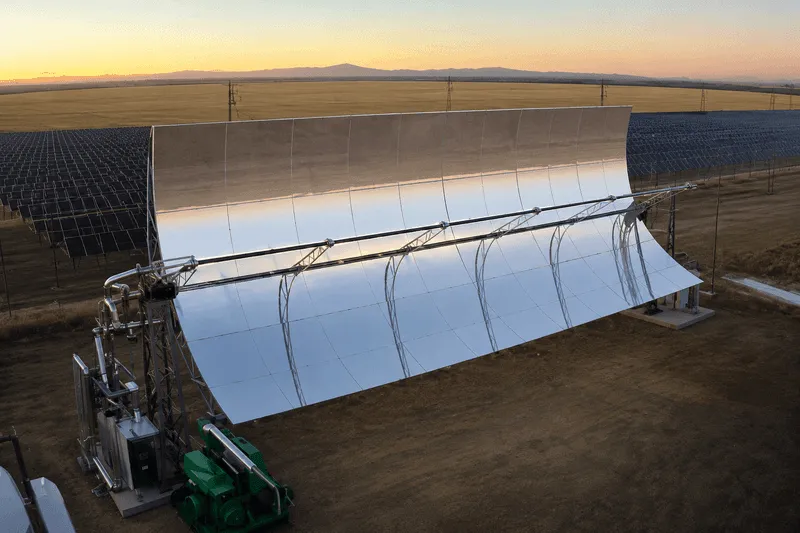
Parabolic Trough
Solar Thermal
for
Leather & Footwear Manufacturing
Cut fuel costs up to 60% Soaking, tanning, drying & finishing 80–250°C solar thermal energy
High fuel cost in leather & footwear manufacturing
Leather processing and footwear manufacturing are thermally demanding value-added processes where heat and steam are essential for quality, productivity and compliance. Thermal energy costs are one of the biggest controllable operating expenses for leather plants.
Most leather plants rely on:
- LPG / Diesel / Furnace Oil boilers
- Coal / Biomass fired boilers (in some facilities)
- Electric steam systems (high OPEX)
Business Impact
- High operating cost
- Exposure to fuel price volatility
- Environmental impact & emissions
- Compliance challenges
What if you could permanently reduce a significant portion of your boiler fuel costs?
KVB Green Energies offers
Parabolic Trough Solar Thermal Systems (PTC)
designed specifically for industrial requirements in
leather and footwear plants.
What This System Does:
heat using solar energy
drying, and finishing processes
existing boiler systems
production with hybrid operation
Impact:
fuel consumption
How the system works
System Process
- Sunlight hits solar mirrors
- Mirrors focus energy onto receiver tubes
- Heat transfer fluid (HTF) absorbs heat
- Thermal energy generates steam
- Steam supplied to leather process lines
- Boiler backup supports during low solar periods
Integration Options
- Boiler Feedwater Pre-Heat
- Direct Steam Generation
- Hybrid Solar + Boiler Backup
- Thermal Storage (optional)
Industrial Performance
- Temperature Range: 120°C – 250°C
- Efficiency: 50–70%
- Solar Contribution: 20–60%
- System Life: 20–30 years
Optional thermal storage enables heat availability beyond sunlight hours.
Across leather & footwear processes
Perfectly suited for all major leather manufacturing heat stages
Soaking & Degreasing
80–100°C hot water supply
Liming, Deliming & Bating
90–120°C for chemical processing
Tanning & Neutralization
110–160°C consistent heat
Drying & Conditioning
120–180°C efficient moisture removal
Drum Heating & Finishing
Continuous thermal supply to drums
Boiler Feedwater Pre-Heating
40–120°C — improves overall efficiency
High heat demand across all stages = high solar savings potential
What leather plants gain
- Reduced Fuel Cost — Replaces a portion of boiler fuel consumption; lower cost per unit of production
- Stable Energy Cost — Less exposure to fluctuating fuel prices; predictable long-term energy expenditure
- Reduced Carbon Emissions — Supports environmental compliance and ESG goals
- Lower Boiler Load — Reduces wear and maintenance on boiler systems
- Improved Sustainability Credentials — Important for global buyers and export markets
Lower cost + sustainable manufacturing = stronger global competitiveness
Economic feasibility & ROI (India)
Typical returns for leather & footwear plants across India — clusters in Tamil Nadu, Karnataka, West Bengal and Uttar Pradesh
After payback: solar thermal becomes a low-cost heat source for decades — lowering operating cost and increasing profitability. India's industrial solar thermal market: ~USD 0.99 Billion (2024) growing at ~7.7% CAGR.